|
|
 |
|
|
User Rating: |
|
8.1
/10
(32
votes)
|
|
|
|
|
|
Barely a twelvemonth after The seven days war that put the world to sleep, Late in the evening the strange horses came. By then we had made our covenant with silence, But in the first few days it was so still We listened to our breathing and were afraid. On the second day The radios failed; we turned the knobs; no answer. On the third day a warship passed us, heading north, Dead bodies piled on the deck. On the sixth day A plane plunged over us into the sea. Thereafter Nothing. The radios dumb; And still they stand in corners of our kitchens, And stand, perhaps, turned on, in a million rooms All over the world. But now if they should speak, If on a sudden they should speak again, If on the stroke of noon a voice should speak, We would not listen, we would not let it bring That old bad world that swallowed its children quick At one great gulp. We would not have it again. Sometimes we think of the nations lying asleep, Curled blindly in impenetrable sorrow, And then the thought confounds us with its strangeness. The tractors lie about our fields; at evening They look like dank sea-monsters couched and waiting. We leave them where they are and let them rust: 'They'll molder away and be like other loam.' We make our oxen drag our rusty plows, Long laid aside. We have gone back Far past our fathers' land. And then, that evening Late in the summer the strange horses came. We heard a distant tapping on the road, A deepening drumming; it stopped, went on again And at the corner changed to hollow thunder. We saw the heads Like a wild wave charging and were afraid. We had sold our horses in our fathers' time To buy new tractors. Now they were strange to us As fabulous steeds set on an ancient shield. Or illustrations in a book of knights. We did not dare go near them. Yet they waited, Stubborn and shy, as if they had been sent By an old command to find our whereabouts And that long-lost archaic companionship. In the first moment we had never a thought That they were creatures to be owned and used. Among them were some half a dozen colts Dropped in some wilderness of the broken world, Yet new as if they had come from their own Eden. Since then they have pulled our plows and borne our loads But that free servitude still can pierce our hearts. Our life is changed; their coming our beginning.
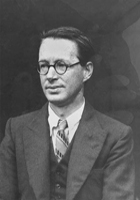
Edwin Muir
|
|
Read poems about / on: sea, world, sometimes, sorrow, war, silence, summer, children, sleep, lost, father, horse, change, child
|
|
 |
 |
 |
 |
|
Comments about this poem (The Horses
by
Edwin Muir
) |
|
Click here to write your
comments about this poem (The Horses by
Edwin Muir
)
|
Cassie Best
(11/20/2007 12:08:00 PM) |
The poem The Horses is one of the most descriptive and imagery poems i have read in a while. The horses symbolized the way of life that our grandfathers lived and then over the years we become more dependent on technology. It showes a how we have evolved from buggies and wagons to tractors and other machines. Even though we have left the horses behind and forgot about them they were there for us when the technology (machines let us down) . I also thought the part about the radios was really bold and discriptive part.
'The radios failed; we turned the knobs; no answer.
On the third day a warship passed us, heading north,
Dead bodies piled on the deck. On the sixth day
A plane plunged over us into the sea. Thereafter
Nothing. The radios dumb;
And still they stand in corners of our kitchens,
And stand, perhaps, turned on, in a million rooms
All over the world. But now if they should speak,
If on a sudden they should speak again,
If on the stroke of noon a voice should speak,
We would not listen, we would not let it bring'
After reading this part i had this image of 1984 and how they had to only listen to a certain person. When i was done reading the peom i had almost drew this whole sketch of what he was discribing and i love that about poems.
|
|
|
Kelly Boyce
(11/20/2007 12:05:00 PM) |
This poem showed me how dependent the world is on technology and if we even see something of Grandfathers time such as the horses, how much of a stranger they are to us. I wonder if we didnt have the advanced technology we have today if we wouldnt have so much problems.
|
|
|
Annamarie Yang
(11/19/2007 5:48:00 PM) |
I feel that this poem symbolizes how humanity progresses. Like the novel 1984, I think this poem can be seen as a warning to the past, present, and future. As we grow more reliant on technology, we start to care less about how things were done before technology existed and gradually forget altogether. While I was reading, I could picture the images Edwin Muir was describing and understand what feelings he was conveying throughout the poem. People usually only start to act after something tragic happens to them or when it's almost too late. In the poem, the people experienced the loss of their friends and family, and the destruction of the world as they knew it. It was only then that they realized how much they regretted trading their horses for tractors and believing that technology would make their lives easier. The horses symbolized a new beginning to the people who wanted nothing to do with technology anymore.
|
|
|
Catherine Tomaszewicz
(11/19/2007 5:23:00 PM) |
I really enjoyed this poem. I think the poet used creative words to describe the images he wished to portray. I like how Edwin Muir repeated words when describing how the radios were still kept in the kitchens of the speakers. Repetition helps make that message clear and memorable. Although a pessimistic view, I don't believe that the world would recreate itself for the better if destruction were to occur. Unfortunetely, our society relies just too much on technology to do without it. The notion of peace is enticing but not realistic. Even though this poem lacks any strict metre, I find that it 'flows' in a way that is quite enjoyable to read! : D
~ Catherine
|
|
|
Brad Rihela
(11/19/2007 2:18:00 AM) |
This poem was written well with very exclusive description. I do not quite agree with the concepts that i feel are being conveyed in this poem, I feel that this poem only shows the negative aspects of the technology in the world today. However it also does a good job of showing the beauty of simplicity in life. Sometimes a simpler world would be a better world in certain aspects. Far less crime would occur, but also far less medical advancements and such would ever have been made. One thing i quite enjoyed about this poem was that i felt as though i was a part of it. i felt as though i was right in the middle of the thundering hooves; the details were very extravagant.
|
|
|
Meghan Pool
(11/19/2007 2:02:00 AM) |
I enjoyed this poem because its like a warning of what is to become of the world. People nowadays are so heavily dependant on technology that they sometimes forget how much nicer things were before. As I read the poem, the picture I had imagined in my mind was dull and grey during the first part. As I read further, things seemed to brighten up as if the coulds were parting to allow the sun to shine through. I think that technology represents all evil in our lives and the horses are representative of purity and the way things used to be. I believe that people do need to get back to their roots to truly dicover who they are and who they want to become. The poem for me, was a real eye-opener on how dependant I am on technology and how liberating it might feel to live like my grand-parents or great-grandparents lived.
|
|
|
Kayla Murphy
(11/18/2007 11:34:00 PM) |
Upon first hearing this poem, I was overcome with a nostalgic feeling of reading books about animals when I was a child. This is fitting because the whole idea of this back-to-basics perfect world is very childlike in and of itself. The end result of this poem is that humans live in harmony with the horses, and the world is oh so wonderful. This cannot work in real life. Real life demands balance. They cannot have all the people live in harmony without conflict. Imagine day but never night, safety but never danger, loud but never quiet, agreeing but never opposing. The world in which everyone agrees with eachother is world not worth living in.
On another note, the choice of horses as the saviors was both a good and a bad choice. It worked well with the mechanics of the poem (remaining humans wanting help and companionship) , but as soon as I heard it was about horses, I prejudged it and already had in my mind that it was going to be like every other piece of horse literature out there.
In conclusion, this poem has good intentions, but is not possible is real life. But hey, isn't the whole point of fictitious literature to escape the real world?
|
|
|
Ross Belansky
(11/18/2007 10:48:00 PM) |
I thought the poem was well written and very descriptive. I could actually hear the horses thundering hooves and i could also hear the silence of a world without an electric hum. Technology takes away from the social part of life, a simpler way of living. More joy and less fighting can be found in a simple world, more peace and calm. When everyone can take time to enjoy the company of one another, our society becomes a better place to live, and I believe Mr. Muir saw that too, and wanted to convey his message through his poem. I got the message, I hope others can too.
|
|
|
Jackie Rempel
(11/18/2007 10:38:00 PM) |
I believe that this poem was inspired by the book of Revelation from the Bible. The Horses have come, representing Jesus Christ, as mankinds' savior. I do believe that this will happen and that this poem shows a relatively accurate description of what it will be like.The technology we are creating to simplify our lives will ultimately be our doom. This technology is what will make the Armageddon and take the massive amounts of lives as described in the poem.I know that technology can be good, but they also say Satan is beautiful and appears as an Angel of Light. It is also like alcohol which can be good for some things, like disinffecting wounds, but can have bad effects if drank too heavily.
|
|
Read all
19
comments >>
|
|
|
 |
 |
 |
|
|
 |
|
People who read
Edwin Muir
|
 |
|
 |
 |
 |
 |
|