
Death Be Not Proud Poem by John Donne


Death Be Not Proud
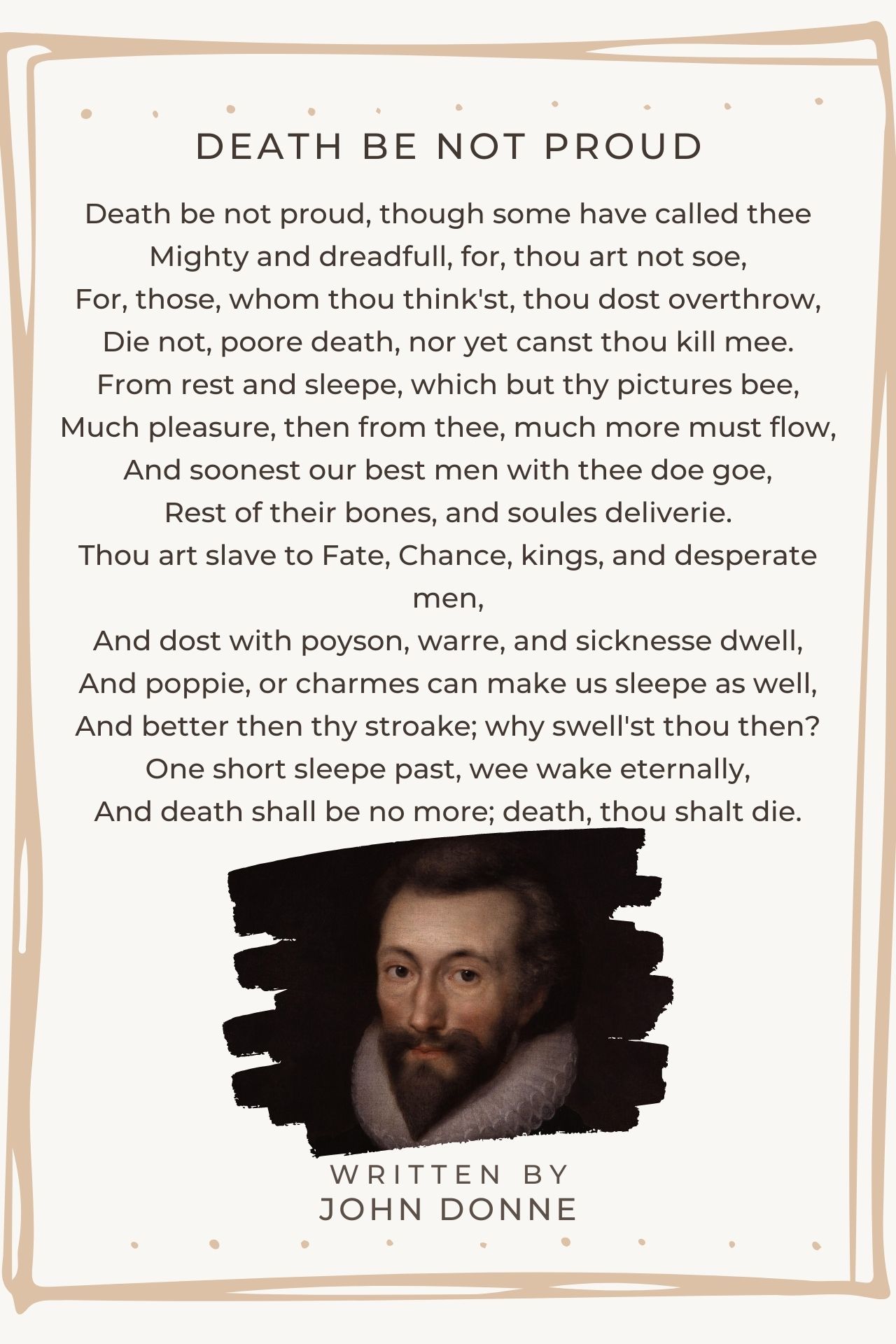
Death be not proud, though some have called thee
Mighty and dreadfull, for, thou art not soe,
For, those, whom thou think'st, thou dost overthrow,
Die not, poore death, nor yet canst thou kill mee.
From rest and sleepe, which but thy pictures bee,
Much pleasure, then from thee, much more must flow,
And soonest our best men with thee doe goe,
Rest of their bones, and soules deliverie.
Thou art slave to Fate, Chance, kings, and desperate men,
And dost with poyson, warre, and sicknesse dwell,
And poppie, or charmes can make us sleepe as well,
And better then thy stroake; why swell'st thou then?
One short sleepe past, wee wake eternally,
And death shall be no more; death, thou shalt die.
This poem is one I had a reading when I did my +2. Now I see this with a different eye... It is so deep in sense, so great in style and so amazing as a whole!
It's about how even though we die physically, our souls still live on forever. Death can never, ever take our souls and spirits away, and so It/He should 'be not proud.' Great poem; I liked it even though it took me a while to decipher ye olde spelling! : -)
I like this poem because it reminds me of John Gunther's book about his son who died of brain cancer 'Death Be Not Proud' -a very moving poem with a lot of meaning and depth-
But that poem has nothing to do with this one. This is pretty shallow.
Congratulations for the metaphysical poet John Donne. Most deserving. Top marks!
Death- the ultimate fate of life; so there is no ego can enjoy life immortally; be not proud on the earth against all creations.
I am not matured enough to comprehend this poem. Maybe I will grasp it in later part of my life
I still remember my University years about this metaphysical poet.. England was in an entirely problematic era.
The powerlessness of death. According to Donne, death is but a pathway to eternal life, and as such, it is not something mighty and dreadful as some may believe it to be. Donne's realism and optimism resonated with the public during this tumultuous time.in England


Delivering Poems Around The World
Poems are the property of their respective owners. All information has been reproduced here for educational and informational purposes to benefit site visitors, and is provided at no charge...
6/9/2026 6:45:39 PM # 1.0.0


Well...I'm a fan and advocate of poetry written according to Wordsworth's ideals, outlined in his 'Preface to the Lyrical Ballads.' This poem is the farthest thing from that. Poetry should be written in every day language, and strike a note with the reader allowing him to relate to it, while still being able to get the author's point across...this poem doesn't give me any sense of familiarity and is by no means conversational. Give me Dover Beach over this any day.