
To Lucasta, Going To The Wars Poem by Richard Lovelace
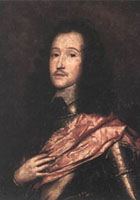

To Lucasta, Going To The Wars
Tell me not (Sweet) I am unkind,
That from the nunnery
Of thy chaste breast and quiet mind
To war and arms I fly.
True, a new mistress now I chase,
The first foe in the field;
And with a stronger faith embrace
A sword, a horse, a shield.
Yet this inconstancy is such
As you too shall adore;
I could not love thee (Dear) so much,
Lov'd I not Honour more.
The first line and the last two lines of this poem are probably all in Barlett's, they are so emblematic of the custom wrapped round the patriarchal theft of males from females. What I like most about this is the sudden pairing of an amphibrach foot with an anapest (second line of the second verse) in what is mainly an iambic dawdle.
The tempo of poem quite reveals the urgency of matter under consideration!
Tell me not (Sweet) I am unkind, That from the nunnery Of thy chaste breast and quiet mind To war and arms I fly.
I think its awsome! ! I love it espically the begining! !
Visit my page! Read my poems! I want to be the youngest poet to get poem of the day! ! !
This poem has not been translated into any other language yet.
I would like to translate this poem


Delivering Poems Around The World
Poems are the property of their respective owners. All information has been reproduced here for educational and informational purposes to benefit site visitors, and is provided at no charge...
4/26/2024 2:54:24 AM # 1.0.0.1119


Lovelace was a Cavalier (Royalist supporter) during the English Civil War, though it is unlikely he actually fought in it, having been placed under an embargo by Parliament for his previous Royalist activities. The poem nowadays seems rather quaint, though the last two lines are probably his most often quoted.