PoemHunter.com   
Nomad Exquisite by Wallace Stevens   
Search:     
Home Poets Poems Lyrics Quotations Music Forum Member Area Poetry E-Books
 
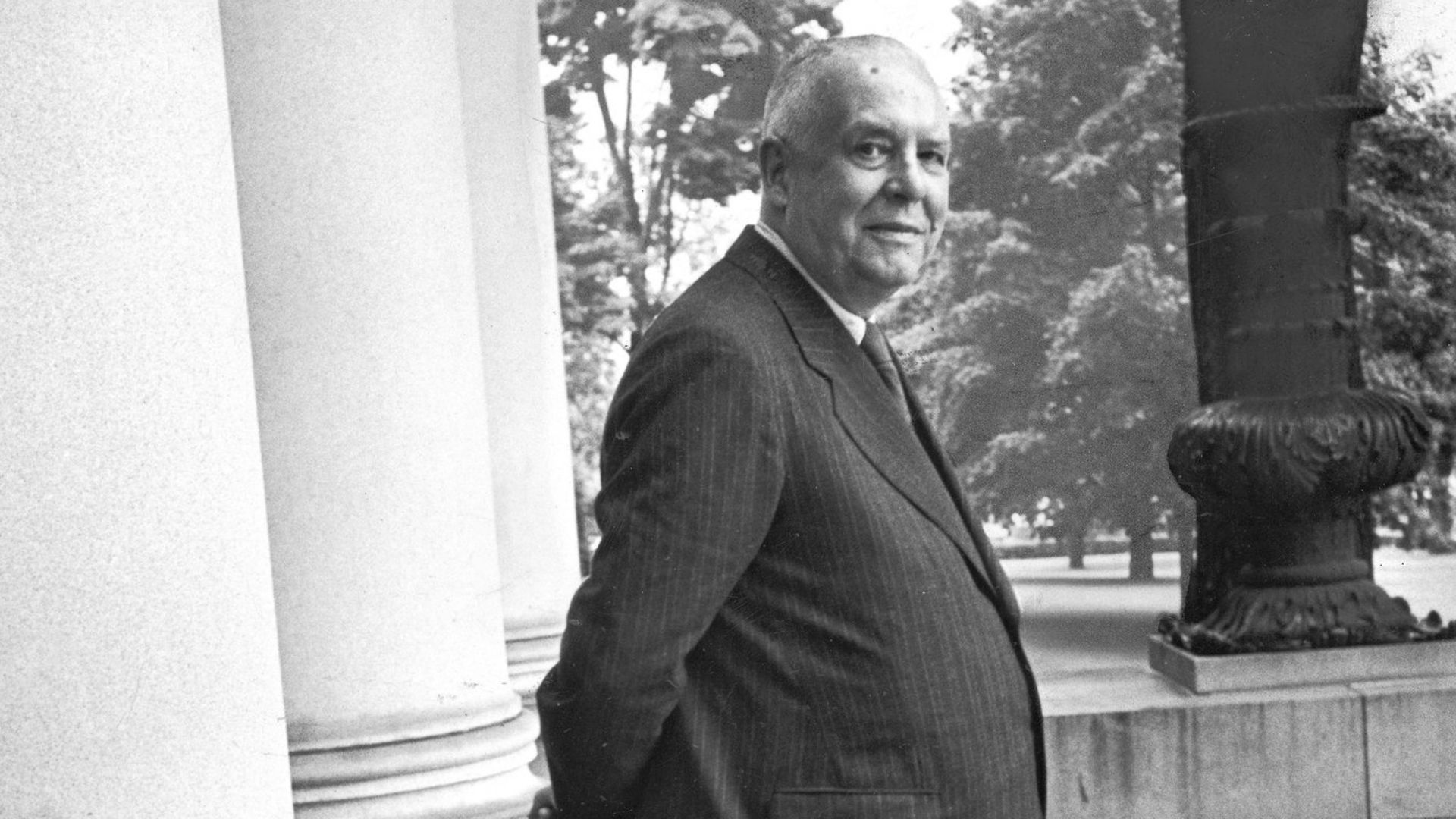
Wallace Stevens
Wallace Stevens (1879 - 1955 / Pennsylvania / United States)
Biography   Poems   Quotations   Comments   More Info   Stats  
Wallace Stevens was regarded as one of the most significant American poets of the 20th century. Stevens largely ignored the literary world and he did .. more >>
35 poems of Wallace Stevens
File Size:231 k 
File Format: Acrobat Reader
To download the eBook right-Click on the title and select "Save Target As".
 
<< prev. poem Poems by Wallace Stevens : 12 / 35 next poem >>
  
 
Share |

 
Nomad Exquisite

User Rating:

7.6 /10
(8 votes)


  As the immense dew of Florida
Brings forth
The big-finned palm
And green vine angering for life,

As the immense dew of Florida
Brings forth hymn and hymn
From the beholder,
Beholding all these green sides
And gold sides of green sides,

And blessed mornings,
Meet for the eye of the young alligator,
And lightning colors
So, in me, comes flinging
Forms, flames, and the flakes of flames.

Wallace Stevens


Share |


Read poems about / on: green, life

 
  Comments about this poem (Nomad Exquisite by Wallace Stevens )
Click here to write your comments about this poem (Nomad Exquisite by Wallace Stevens )
 
  Beverly Scofield  (1/15/2008 8:01:00 PM)

I'm disheartened. A flick of my wrist made me lose an entire comment. And it was so scholarly, too. So, I have to back up and recreate, but my heart is no longer in it. (I guess that's what 'disheartened' means, come to think of it.

Again, your comment, Gary, is a thing of beauty in itself. My two comments are:

1) Stevens give his plantlife an almost animalistic nature by using such muscular terminology as 'the big-finned palm' and the 'green vines angering for life.' One can almost imagine them clawing their way out of the primordial ooze into the 'immense dew of Florida.'

2) I am struck by the way he twists the meaning of 'flinging' into a configuration that makes the mind stop and say, 'What? ' The process of flinging involves sending something flying away from the person saying 'me.' When Stevens says,

'So, in me, comes flinging
Forms, flames, and the flakes of flames.

he presents us with an image that is impossible to visualize, even metaphorically.
  Gary Witt  (1/24/2007 11:40:00 AM)

I find this poem very curious. Just as the vast presence of water (immense dew) in Florida brings forth life, and beauty that is praised by everyone who beholds it (hymn and hymn) , that same humid, fecund environment also causes the poet-narrator to conjure up mental images of “forms, flames, and the flakes of flames.”

The “immense dew” brings to mind an image that includes flames and the flakes of flames? What’s with that? I mean, for starters, why not some other element such as earth or air? (But all right, let’s just say there’s a dichotomy between fire and water and leave it at that.) Essentially, what some would view as a scenic paradise—a place with such beauty that it would strengthen a belief in God—calls to the narrator’s mind vague images of flames and destruction.

The narrator does not sound like a “nomad exquisite.” There seems (to me anyway) to be a degree of sarcasm or irony in the title. More likely, it is the “beholder beholding” who is the nomad exquisite. There is a definite separation between the “beholder beholding” and the “me” in the second to the last line. They don’t appear to be the same person, but the “me” seems to be quoting (sarcastically) the “beholder” from the very beginning of the poem.

Stevens may be taking a poke at the Florida tourists who stare, gaga, at the palms, the flowers, the ocean, and so forth. Do you suppose the poem is a local’s parody of tourists—the exquisite nomads?

The use of the words “forms” and “flames” in the last line leaves a great deal to the imagination. I suppose the word “forms” could be used in the same way Plato used it (see “Not Ideas about the Thing but the Thing Itself”) . On the other hand, to Stevens, “forms” could refer to insurance forms, and the clutter of his occupation at the Hartford. Seen from the perspective of Key West, the vision of a bonfire of forms or a burning desk or file cabinet in Hartford might give him a great deal of enjoyment. Likewise, the idea of “flinging forms” may have brought a smile to his face. It could be that the humid atmosphere of Florida causes a new employee at the Hartford to want to chuck his job and go native.

To me, the poem sounds a little like the opening of a bad travelogue, but deliberately so. Again, a parody. The words appear a little overdone, even pretentious, in presenting “the immense dew of Florida” on the big screen at last. It is as if Stevens were mocking the language of the “lecturers” who at the time—the poem was written in 1919—brought their silent travel films from city to city and provided their narration live. Here, that narration appears on the one hand pretentious, and on the other inarticulate. (This from a man whose craftsmanship was and remains beyond question.) The “immense dew of Florida” seems like an over-blown, sentimental way of saying the place is humid. Yet in the second stanza the “lecturer” lapses into inarticulate redundancy: hymn and hymn, beholders beholding, green sides and gold sides of green sides. It seems grand, but rings empty; as if the landscape has not actually left the lecturer breathless, but rather the lecturer knows he is supposed to be left breathless by it and is merely fulfilling that duty.

Cut to shot of alligator.

The idea that the natural beauty of a landscape or an area could cause people (in this case the “beholder”) to write hymns is not surprising. Many people take the natural beauty of the world as evidence that God exists. I suspect, however, that Stevens would disagree with that premise. He has chosen to juxtapose “hymn and hymn” sung in praise of the Florida landscape with “blessed mornings” that are “meet” (which I take to mean “suitable” and with a possible pun on “meat”) for the eye of the young alligator. It’s not just a pretty landscape; it is a dangerous one as well. The contrast between the holiness of hymns and the reptilian brutality of nature is jarring. It also calls to mind the line in Sunday Morning, “Death is the mother of beauty.” And, although he doesn’t couch it as such, bringing together natural beauty and its “suitability” for the alligator might also be a reference to “the problem of evil.” In other words, how does one rationalize the existence of evil—or even natural brutality—with the presence of God?

The line “Forms, flames, and the flakes of flame” sounds primitive or primordial to me. Of course, it could be a vision of hell, with “forms” suffering the fires of eternal damnation and all that. Maybe the “me” of the poem is worried about his own mortality. Or it could remind the reader of a ceremony or dance performed around a fire by some primitive civilization. Stevens could be saying that the same things that cause some people today (who behold the Florida scenery) to write hymns and believe in God have previously caused earlier civilizations to create and engage in other rituals. And ultimately, it could be that Stevens equates a belief in God to a belief in the effectiveness of those primitive ceremonies or rituals.

Read all 2 comments >>
 
  People who read Wallace Stevens


  More classic poets:

      The complete list >>

 
  Top 500 Poems

  1. Phenomenal Woman by Maya Angelou
  2. Still I Rise by Maya Angelou
  3. If You Forget Me by Pablo Neruda
  4. Where the Sidewalk Ends by Shel Silverstein
  5. Dreams by Langston Hughes
  6. i carry your heart with me by ee cummings
  7. I Do Not Love You Except Because I Love You by Pablo Neruda
  8. Annabel Lee by Edgar Allan Poe
  9. The Road Not Taken by Robert Frost
  10. I Crave Your Mouth, Your Voice, Your Hair by Pablo Neruda
  11. Television by Roald Dahl
  12. One Inch Tall by Shel Silverstein
  13. Warning by Jenny Joseph
  14. As I Grew Older by Langston Hughes
  15. A Dream Within A Dream by Edgar Allan Poe
  16. Fire and Ice by Robert Frost
  17. If by Rudyard Kipling
  18. On the Ning Nang Nong by Spike Milligan
  19. Dream Deferred by Langston Hughes
  20. "I Wandered Lonely as a Cloud" by William Wordsworth
  21. Alone by Edgar Allan Poe
  22. Stopping by Woods on a Snowy Evening by Robert Frost
  23. The Highwayman by Alfred Noyes
  24. Do Not Go Gentle Into That Good Night by Dylan Thomas
  25. All That is Gold Does Not Glitter by JRR Tolkien
The complete list of Top 500 Poems >>
  Top 500 Poets

  1. Pablo Neruda
  2. Langston Hughes
  3. Maya Angelou
  4. Charles Bukowski
  5. ee cummings
  6. Shel Silverstein
  7. William Shakespeare
  8. Dylan Thomas
  9. Spike Milligan
  10. Billy Collins
  11. Emily Dickinson
  12. Khalil Gibran
  13. Sylvia Plath
  14. Dorothy Parker
  15. Elizabeth Bishop
  16. Ted Hughes
  17. Roald Dahl
  18. Robert Frost
  19. Walt Whitman
  20. Allen Ginsberg
  21. William Blake
  22. Edgar Allan Poe
  23. Mary Oliver
  24. Robert Browning
  25. William Wordsworth
The complete list of Top 500 Poets >>
 
 
  E-MAIL THIS PAGE TO A FRIEND
Found this page interesting? Recommend it to your friend!     Your E-mail:    Friend's Email:      
 

(c) Poems are the property of their respective owners. All information has been reproduced here for educational and informational purposes to benefit site visitors, and is provided at no charge..  About Us | Copyright notice | Privacy statement | Help
11/21/2009 5:29:45 PM. #.34# You Are Here: Nomad Exquisite by Wallace Stevens

Home | Poets | Poems | Free Poetry eBooks | Contests | Sites | Submit a Poem | Manage Your Poems | GameGar | Contact Us

Christmas Poems | Love Poems | Pablo Neruda | Death Poems | Sad Poems | Birthday Poems | Wedding Poems | Annabel Lee | Sorry Poems