
Jibanananda Das
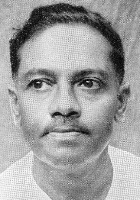

Jibanananda Das Poems
It has been a thousand years since I started trekking the earth
A huge travel in night’s darkness from the Ceylonese waters
to the Malayan sea
I have been there too: the fading world of Vimbisara and Asoka
...
I remember I used to be a king of Babylonia
You were my slave girl,
In the night,
...
Ah kite, golden-winged kite, don’t cry any more this noon
of moist clouds, as you hover around the Dhanshniri river
Your whimper reminds of her eyes dim as pale cane-fruit!
A pretty princess she has drifted afar,
...
It was heard: to the post-mortem cell
he had been taken;
last night—in the darkness of Falgoon-night
When the five-night-old moon went down—
...
Once in a starry night sprawling on the cloud's edge
It occurred: am I a soul—or merely a ghostly spirit?
Under the moonlight of a desolate sea I discern
...
There is no meaning in living—I don't say this.
There is meaning for some, may be for all—may be a perfect meaning.
Yet I hear the white sound of wind-driven birds
In the water of the distant seas
...
I walk along the tram line: night now deep
I hear the teasing of some life of the past:
‘You are like a broken tram—
there is no depot, you don’t need wage
...
I discern a few birds somewhere outside on grass,
dew drops dry-up in the sun rays
a few people—around their corn-field,
lonely like human beings
...
All day I inevitably encounter a cat here and there
In the shadow of trees or out in the sun, around
the pile of fallen leaves;
I catch sight of him, deeply engrossed like a bee,
...
Here lies Sarojini; I don't know if she is lying here!
Enough she had slept; — then one day she left for a far-away cloud.
Has Sarojini travelled that far, where - darkness over - a new horizon
wakes up under the focus of light?
...
Lying upon the stretcher perhaps fog clogs your eyes
Don't worry, death is not another unjust light;
How come then so many people embrace death,
craving a torch like flying ants?
...
If I got an eternal life - and then alone go on
walking the paths of the world: I shall see green grasses
spring up and yellow leaves dropp off - watch the sky
clearing as it dawns - and at the dusk, a streak of
...
I have seen Bengal’s face, that is why I do not seek
Beauty of the earth any more:
...
The wheel-cart idly rolls laden with golden straw
—the late-noon sunshine fades
The birds: black, blue and brown—flap their wings
in the cellar of the corn field
...
Looks light is fading out—wonder is waning all the more.
Is the sky blue as it was? The sky is no longer as blue,
Neither is there much wonder left in women's eye,
Kingfishers today are children's birds; kids are no longer
...
Go where you will – I shall remain on Bengal’s shore
Shall see jackfruit leaves dropping in the dawn’s breeze;
Shall see the brown wings of shalik chill in the evening,
...
At a slightly slothful pace
A silent man quietly walks across the meadows
His autumn passes by mostly propped on two legs
With a mouthful of still shadow of a plough and ox.
...
Finally, I’m done with the ledger of my life,
Miss Banalata Sen!
...
There happens to be a port for light-skinned gals on the shore of Malay Sea.
Seen many a sea all across the globe; been through Kuala Lumpur, Java,
Sumatra, Indochina, and Bali where the blue mist laden sun's ray had touched me.
...
My eyes are sleep-laden,
I return home taking with me songs of fallen crops!
...
Jibanananda Das Biography
Jibanananda Das was a Bengali poet, writer, novelist and essayist. Dimly recognized during his lifetime, today Das is acknowledged as the premier poet of post-Tegorian literature in India and Bangladesh. He is considered as Bengal’s “greatest” modern poet and “best loved” poet too, his poems being regarded as "part of the Bengali consciousness on the both side of border" between India and Bangladesh. For the poets in the latter half of the twentieth century Das “has practically come to take place of Tagore . Das’s oeuvre is eclectic and resists classification under any single heading or school. Das wrote ceaselessly but as he was an introvert and the “most alone of [Bengali] poets”, he “compelled to suppress some of his most important writings or to locate them in a secret life”. During his lifetime, only seven volumes of his poems were published. After his death, it was discovered that apart from poems Das wrote several novels and a large number of short stories. His unpublished works are still being published. Das died on October 22, 1954; eight days after he was hit by a tramcar. The witnesses said that though the tramcar whistled, he did not stop and got struck. Some deem the accident as an attempt of suicide. Biography “Poetry and life are two different outpouring of the same thing; life as we usually conceive it contains what we normally accept as reality, but the spectacle of this incoherent and disorderly life can satisfy neither the poet's talent nor the reader's imagination ... poetry does not contain a complete reconstruction of what we call reality; we have entered a new world. ” —Jibanananda Das Early Life Jibanananda Das was born in 1899 in a Vaidya-Brahmin family in the small district town of Barisal, located in the south of Bangladesh. His ancestors came from the Bikrampur region of Dhaka district, from a now-extinct village called Gaupara on the banks of the river Padma. Jibanananda's grandfather Sarbananda Dasgupta was the first to settle permanently in Barisal. He was an early exponent of the reformist Brahmo Samaj movement in Barisal and was highly regarded in town for his philanthropy. He erased the -gupta suffix from the family name, regarding it as a symbol of Vedic Brahmin excess, thus rendering the surname to Das. Jibanananda's father Satyananda Das (1863–1942) was a schoolmaster, essayist, magazine publisher, and founder-editor of Brôhmobadi, a journal of the Brahmo Samaj dedicated to the exploration of social issues. Jibanananda's mother Kusumkumari Das was a poet who wrote a famous poem called Adôrsho Chhele ("The Ideal Boy") whose refrain is well known to Bengalis to this day: Amader deshey hobey shei chhele kobey / Kothae na boro hoye kajey boro hobey. (The child who achieves not in words but in deeds, when will this land know such a one?) Jibanananda was the eldest son of his parents, and was called by the nickname Milu. A younger brother Ashokananda Das was born in 1908 and a sister called Shuchorita in 1915. Milu fell violently ill in his childhood, and his parents feared for his life. Fervently desiring to restore his health, Kusumkumari took her ailing child on pilgrimage to Lucknow, Agra and Giridih. They were accompanied on these journeys by their uncle Chandranath. In January 1908, Milu, by now eight years old, was admitted to the fifth grade in Brojomohon School. The delay was due to his father's opposition to admitting children into school at too early an age. Milu's childhood education was therefore limited to his mother's tutelage. His school life passed by relatively uneventfully. In 1915 he successfully completed his matriculation examination from Brojomohon, obtaining a first division in the process. He repeated the feat two years later when he passed the intermediate exams from Brajamohan College. Evidently an accomplished student, he left his rural Barisal to join the University of Calcutta. Life in Calcutta: First Phase Jibanananda enrolled in Presidency College, Kolkata, then as now a prestigious seat of Indian learning. He studied English literature and graduated with a BA (Honours) degree in 1919. That same year, his first poem appeared in print in the Boishakh issue of Brahmobadi journal. Fittingly, the poem was called Borsho-abahon (Arrival of the New Year). This poem was published anonymously, with only the honorific Sri in the byline. However, the annual index in the year-end issue of the magazine revealed his full name: "Sri Jibanananda Das Gupta, BA". In 1921, he completed the MA degree in English from University of Calcutta, obtaining a second class. He was also studying law. At this time, he lived in the Hardinge student quarters next to the university. Just before his exams, he fell ill with bacillary dysentery, which affected his preparation for the examinaiton. The following year, he started his teaching career. He joined the English department of City College, Calcutta as a tutor. By this time, he had left Hardinge and was boarding at Harrison Road. He gave up his law studies. It is thought that he also lived in a house in Bechu Chatterjee Street for some time with his brother Ashokanananda, who had come there from Barisal for his MSc studies. Travels and Travails His literary career was starting to take off. When Deshbondhu Chittaranjan Das died in June 1925, Jibanananda wrote a poem called 'Deshbandhu'r Prayan'e' ("On the Death of the Friend of the nation") which was published in Bangabani magazine. This poem would later take its place in the collection called Jhara Palok (1927). On reading it, poet Kalidas Roy said that he had thought the poem was the work of a mature, accomplished poet hiding behind a pseudonym. Jibanananda's earliest printed prose work was also published in 1925. This was an obituary entitled "Kalimohan Das'er Sraddha-bashorey," which appeared in serialized form in Brahmobadi magazine. His poetry began to be widely published in various literary journals and little magazines in Calcutta, Dhaka and elsewhere. These included Kallol, perhaps the most famous literary magazine of the era, Kalikalam (Pen and Ink), Progoti (Progress) (co-edited by Buddhadeb Bose) and others. At this time, he occasionally used the surname Dasgupta as opposed to Das. In 1927, Jhara Palok (Fallen Feathers), his first collection of poems, came out. A few months later, Jibanananda was fired from his job at the City College. The college had been struck by student unrest surrounding a religious festival, and enrolment seriously suffered as a consequence. Still in his late 20s, Jibanananda was the youngest member of the faculty and therefore regarded as the most dispensable. In the literary circle of Calcutta, he also came under serial attack. One of the most serious literary critics of that time, Sajanikanta Das, began to write aggressive critiques of his poetry in the review pages of Shanibarer Chithi (the Saturday Letter) magazine. With nothing to keep him in Calcutta, Jibanananda left for the small town of Bagerhat in the far south, there to resume his teaching career at Bagerhat P. C. College. But only after about three months he returned to the big city, now in dire financial straits. To make ends meet, he gave private tuition to students while applying for full-time positions in academia. In December 1929, he moved to Delhi to take up a teaching post at Ramjosh College; again this lasted no more than a few months. Back in Barisal, his family had been making arrangements for his marriage. Once Jibanananda got to Barisal, he failed to go back to Delhi – and, consequently, lost the job. In May 1930, he married Labanya, a girl whose ancestors came from Khulna. At the subsequent reception in Dhaka's Ram Mohan Library, leading literary lights of the day such as Ajit Kumar Dutta and Buddhadeb Bose were assembled. A daughter called Manjusree was born to the couple in February of the following year. Around this time, he wrote one of his most controversial poems. "Camp'e" (At the Camp) was printed in Sudhindranath Dutta's Parichay magazine and immediately caused a firestorm in the literary circle of Calcutta. The poem's ostensible subject is a deer hunt on a moonlit night. Many accused Jibanananda of promoting indecency and incest through this poem. More and more, he turned now, in secrecy, to fiction. He wrote a number of short novels and short stories during this period of unemployment, strife and frustration. In 1934 he wrote the series of poems that would form the basis of the collection called Rupasi Bangla. These poems were not discovered during his lifetime, and were only published in 1957, three years after his death. Back in Barisal In 1935, Jibanananda, by now familiar with professional disappointment and poverty, returned to his alma mater Brajamohan College, which was then affiliated with the University of Calcutta. He joined as a lecturer in the English department. In Calcutta, Buddhadeb Bose, Premendra Mitra and Samar Sen were starting a brand new poetry magazine called Kobita. Jibanananda's work featured in the very first issue of the magazine, a poem called Mrittu'r Aagey (Before Death). Upon reading the magazine, Tagore wrote a lengthy letter to Bose and especially commended the Das poem: Jibanananda Das' vivid, colourful poem has given me great pleasure. It was in the second issue of Kobita (Poush 1342 issue, Dec 1934/Jan 1935) that Jibanananda published his now-legendary Banalata Sen. Today, this 18-line poem is among the most famous poems in the language. The following year, his second volume of poetry Dhusar Pandulipi was published. Jibanananda was by now well settled in Barisal. A son Samarananda was born in November 1936. His impact in the world of Bengali literature continued to increase. In 1938, Tagore compiled a poetry anthology entitled Bangla Kabya Parichay (Introduction to Bengali Poetry) and included an abridged version of Mrityu'r Aagey, the same poem that had moved him three years ago. Another important anthology came out in 1939, edited by Abu Sayeed Ayub and Hirendranath Mukhopadhyay; Jibanananda was represented with four poems: Pakhira, Shakun, Banalata Sen, and Nagna Nirjan Haat. In 1942, the same year that his father died, his third volume of poetry Banalata Sen was published under the aegis of Kobita Bhavan and Buddhadeb Bose. A ground-breaking modernist poet in his own right, Bose was a steadfast champion of Jibanananda's poetry, providing him with numerous platforms for publication. 1944 saw the publication of Maha Prithibi. The Second World War had a profound impact on Jibanananda's poetic vision. The following year, Jibanananda provided his own translations of several of his poems for an English anthology to be published under the title Modern Bengali Poems. Oddly enough, the editor Debiprasad Chattopadhyaya considered these translations to be sub-standard, and instead commissioned Martin Kirkman to translate four of Jibanananda's poems for the book. Life in Calcutta: Final Phase The aftermath of the war saw heightened demands for Indian independence. Muslim politicians led by Jinnah wanted an independent homeland for the Muslims of the subcontinent. Bengal was uniquely vulnerable to partition: its western half was majority-Hindu, its eastern half majority-Muslim. Yet adherents of both religions spoke the same language, came from the same ethnic stock, and lived in close proximity to each other in town and village. Jibanananda had emphasized the need for communal harmony at an early stage. In his very first book Jhora Palok, he had included a poem called Hindu Musalman. In it he proclaimed: However, events in real life belied his beliefs. In the summer of 1946, he travelled to Calcutta from Barisal on three months' paid leave. He stayed at his brother Ashokananda's place through the bloody riots that swept the city. Just before partition in August 1947, Jibanananda quit his job at Brajamohan College and said goodbye to his beloved Barisal. He and his family were among the X million refugees who took part in the largest cross-border exchange of peoples in history. For a while he worked for a magazine called Swaraj as its Sunday editor. But he left the job after a few months. In 1948, he completed two of his novels, Mallyaban and Shutirtho, neither of which were discovered during his life. Shaat'ti Tarar Timir was published in December 1948. The same month, his mother Kusumkumari Das died in Calcutta. By now, he was well established in the Calcutta literary world. He was appointed to the editorial board of yet another new literary magazine Dondo (Conflict). However, in a reprise of his early career, he was sacked from his job at Kharagpur College in February 1951. In 1952, Signet Press published Banalata Sen. The book received widespread acclaim and won the Book of the Year award from the All-Bengal Tagore Literary Conference. Later that year, the poet found another job at Borisha College (today known as Borisha Bibekanondo College). This job too he lost within a few months. He applied afresh to Diamond Harbour Fakirchand College, but eventually declined it, owing to travel difficulties. Instead he was obliged to take up a post at Howrah Girl's College (now known as Bijoy Krishna Girls’ College), a constituent affiliated undergraduate college of the University of Calcutta. As the head of the English department, he was entitled to a 50-taka monthly bonus on top of his salary. By the last year of his life, Jibanananda was acclaimed as one of the best poets of the post-Tagore era. He was constantly in demand at literary conferences, poetry readings, radio recitals etc. In May 1954, he was published a volume titled 'Best Poems' (Sreshttho Kobita). His Best Poems won the Indian Sahitya Akademi Award in 1955. Love and Marriage Young Jibanananda fell in love with Shovona, daughter of his uncle Atulchandra Das, who lived in the neighbourhood. He dedicated his first anthology of poems to Shovona without mentioning her name explicitly. He did not try to marry Shovona since marriage between cousins was not approvable by the society. But he never forgot Shovona who went by her nick Baby. She has been referred to as Y in his literary notes. Soon after wedding with Labanyaprabha Das (née Gupta) in 1930, personality clash erupted and Jibanananda Das gave up hope of a happy married life. The gap with his wife never narrowed. While Jibanananda was struggling with death after a tram accident on 14 October 1954, Labanyaprabha did not find time for more than once for visiting her husband on death bed. At that time she was busy in film-making in Tollyganj. Death “One poet dead, killed near his fiftieth year . . . did introduce what for India would be 'the modern spirit': bitterness, self-doubt, sex, street diction, personal confession...” —Allen Ginsberg On October 14, 1954, he was carelessly crossing a road near Calcutta's Deshapriya Park when he was hit by a tram. Jibanananda was returning home after his routine evening walk. At that time, he used to reside in a rented apartment on the Lansdowne Road. Seriously injured, he was taken to Shambhunath Pundit Hospital. Poet-writer Sajanikanta Das who had been one of his fiercest critics was tireless in his efforts to secure the best treatment for the poet. He even persuaded Dr. Bidhan Chandra Roy (then chief minister of West Bengal) to visit him in hospital. Nonetheless, the injury was too severe to redress. Jibanananda died in hospital on October 22, 1954 eight days later, at about midnight. He was then 55 and left behind his wife, Labanyaprabha Das, a son and a daughter, and the ever-growing band of readers. His body was cremated the following day at Keoratola crematorium. Following popular belief, it has been alleged in some biographical accounts that his accident was actually an attempt at suicide.Although none of the Jibanananda biographers have indicated such, it appears from circumstantial evidence that it was an attempt to end his own life. The literary circle deeply mourned his death. Almost all the newspapers published obituaries which contained sincere appreciations of the poetry of Jibanananda. Poet Sanjay Bhattacharya wrote the death news and sent to different newspapers. On 1 November 1954, The Times of India wrote : The premature death after an accident of Mr. Jibanananda Das removes from the field of Bengali literature a poet, who, though never in the limelight of publicity and prosperity, made a significant contribution to modern Bengali poetry by his prose-poems and free-verse. ... A poet of nature with a serious awareness of the life around him Jibanananda Das was known not so much for the social content of his poetry as for his bold imagination and the concreteness of his image. To a literary world dazzled by Tagore’s glory, Das showed how to remain true to the poet’s vocation without basking in its reflection.” In his obituary in the Shanibarer Chithi, Sajanikanta Das quoted from the poet : When one day I’ll leave this body once for all - Shall I never return to this world any more? Let me come back On a winter night To the bedside of any dying acquaintance With a cold pale lump of orange in hand. Everyday Jibanananda returns to thousand of his readers and touches them with his unforgettable lines. Jibanananda and Bengali poetry Influence of Tagore As of 2009, Bengali is the mother tongue of more than 300 million people living mainly in Bangladesh and India. Bengali poetry of the modern age flourished on the elaborate foundation laid by Michael Madhusudan Dutt (1824–1873) and Rabindranath Tagore (1861–1941). Tagore, a literary giant unparalleled in his time, ruled over the domain of Bengali poetry and literature for more than half a century, inescapably influencing contemporary poets. Bengali literature caught the attention of the international literary world when Tagore was awarded the 1913 Nobel Prize in Literature for Gitanjali, an anthology of poems rendered into English by the poet himself with the title Song Offering. Since then Bengali poetry has travelled a long way. It has evolved around its own tradition; it has responded to the poetry movements around the world; it has assumed various dimensions in different tones, colours and essence. Contemporaries of Jibananda In Bengal, efforts to break out of the Tagorian worldview and stylistics started in the early days of the 20th century. Poet Kazi Nazrul Islam (1899–1976) popularized himself on a wide scale with patriotic themes and musical tone and tenor. However, a number of new -ration poets consciously attempted to align Bengali poetry with the essence of worldwide emergent modernism, starting towards the end of the 19th century and attributeable to contemporary European and American trends. Five poets who are particularly acclaimed for their contribution in creating a post-Tagorian poetic paradigm and infusing modernism in Bengali poetry are Sudhindranath Dutta (1901–1960), Buddhadeb Bose (1908–1974), Amiya Chakravarty (1901–1986), Jibanananda Das (1899–1954) and Bishnu Dey (1909–1982). The contour of modernism in 20th-century Bengali poetry was drawn by these five pioneers and some of their contemporaries. However, not all of them have survived the test of time. Of them, poet Jibanananda Das was little understood during his lifetime. In fact, he received scanty attention and some considered him incomprehensible. Readers, including his contemporary literary critics, also alleged faults in his style and diction. On occasions, he faced merciless criticism from leading literary personalities of his time. Even Tagore made unkind remarks on his diction, although he praised his poetic capability. Nevertheless, destiny reserved a crown for him. Growth of Popularity During the later half of the twentieth century, Jibanananda Das emerged as the most popular poet of modern Bengali literature. Popularity apart, Jibanananda Das had distinguished himself as an extraordinary poet presenting a paradigm hitherto unknown. Whilst his unfamiliar poetic diction, choice of words and thematic preferences took time to reach the hearts of readers, by the end of the 20th century the poetry of Jibanananda had become a defining essence of modernism in 20th-century Bengali poetry. Whilst his early poems bear the undoubted influence of Kazi Nazrul Islam and other poets like Satyendranath Dutta, before long Jibananda had thoroughly overcame these influences and created a new poetic diction. Buddhadeb Bose was among the first to recognize his style and thematic novelty. However, as his style and diction matured, his message appeared obscured. Readers, including critics, started to complain about readability and question his sensibility. Only after his accidental death in 1954 did a readership emerge that not only was comfortable with Jibanananda's style and diction but also enjoyed his poetry. Questions about the obscurity of his poetic message were no longer raised. By the time his birth centenary was celebrated in 1999, Jibanananda Das was the most popular and well-read poet of Bengali literature. Even when the last quarter of the 20th century ushered in the post-modern era, Jibanananda Das continued to be relevant to the new taste and fervour. This was possible because his poetry underwent many cycles of change, and later poems contain post-modern elements. Poetics Jibanananda Das started writing and publishing inhis early 20s. During his lifetime he published only 269 poems in different journals and magazines, of which 162 were collected in seven anthologies, from Jhara Palak to Bela Obela Kalbela. Many of his poems have been published posthumously at the initiative of his brother Asokananda Das, sister Sucharita Das and nephew Amitananda Das, and the efforts of Dr. Bhumendra Guha, who over the decades copied them from scattered manuscripts. By 2008, the total count of Jibananda's known poems stood at almost 800. In addition, numerous novels and short stories were discovered and published about the same time. Jibanananda scholar Clinton B. Seely has termed Jibanananda Das as "Bengal's most cherished poet since Rabindranath Tagore". On the other hand, to many, reading the poetry of Jibanananda Das is like stumbling upon a labyrinth of the mind similar to what one imagines Camus's 'absurd' man toiling through. Indeed, Jibanananda Das's poetry is sometimes an outcome of profound feeling painted in imagery of a type not readily understandable. Sometimes the connection between the sequential lines is not obvious. In fact, Jibanananda Das broke the traditional circular structure of poetry (introduction-middle-end) and the pattern of logical sequence of words, lines and stanzas. Consequently, the thematic connotation is often hidden under a rhythmic narrative that requires careful reading between the lines. The following excerpt will bear the point out: Lepers open the hydrant and lap some water. Or maybe that hydrant was already broken. Now at midnight they descend upon the city in droves, Scattering sloshing petrol. Though ever careful, Someone seems to have taken a serious spill in the water. Three rickshaws trot off, fading into the last gaslight. I turn off, leave Phear Lane, defiantly Walk for miles, stop beside a wall On Bentinck Street, at Territti Bazar, There in the air dry as roasted peanuts. (Night - a poem on night in Calcutta, translated by Clinton B. Seely) Though Jibananda Das was variously branded at times and was popularly known as a modernist of the Yeatsian-Poundian-Eliotesque school, Annadashankar Roy called him the truest poet. Jibanananda Das conceived a poem and moulded it up in the way most natural for him. When a theme occurred to him, he shaped it with words, metaphors and imagery that distinguished him from all others. Jibanananda Das's poetry is to be felt, rather than merely read or heard. Writing about Jibanananda Das' poetry, Joe Winter remarked: It is a natural process, though perhaps the rarest one. Jibanananda Das's style reminds us of this, seeming to come unbidden. It is full of sentences that scarcely pause for breath, of word-combinations that seem altogether unlikely but work, of switches in register from sophisticated usage to a village-dialect word, that jar and in the same instant settle in the mind, full of friction – in short, that almost becomes a part of the consciousness ticking. A few lines are quoted below in support of Winter's remarks: Nevertheless, the owl stays wide awake; The rotten, still frog begs two more moments in the hope of another dawn in conceivable warmth. We feel in the deep tracelessness of flocking darkness the unforgiving enmity of the mosquito-net all around; The mosquito loves the stream of life, awake in its monastery of darkness. (One day eight years ago, translated by Faizul Latif Chowdhury) Or elsewhere: ... how the wheel of justice is set in motion by a smidgen of wind - or if someone dies and someone else gives him a bottle of medicine, free - then who has the profit? - over all of this the four have a mighty word-battle. For the land they will go to now is called the soaring river where a wretched bone-picker and his bone come and discover their faces in water - till looking at faces is over. (Idle Moment, translated by Joe Winter) Also noteworthy are his sonnets, the most famous being seven untitled pieces collected in the publication Shaat-ti Tarar Timir ("The Blackness of Seven Stars), where he describes, on one hand, his attachment to his motherland, and on the other, his views about life and death in general. They are noteworthy not only because of the picturesque description of nature that was a regular feature of most of his work but also for the use of metaphors and allegories. For example, a lone owl flying about in the night sky is taken as an omen of death, while the anklets on the feet of a swan symbolizes the vivacity of life. Jibanananda successfully integrated Bengali poetry with the slightly older Eurocentric international modernist movement of the early 20th century. In this regard he possibly owes as much to his exotic exposure as to his innate poetic talent. Although hardly appreciated during his lifetime, many critics believe that his modernism, evoking almost all the suggested elements of the phenomenon, remains untranscended to date, despite the emergence of many notable poets during the last 50 years. His success as a modern Bengali poet may be attributed to the facts that Jibanananda Das in his poetry not only discovered the tract of the slowly evolving 20th-century modern mind, sensitive and reactive, full of anxiety and tension, bu that he invented his own diction, rhythm and vocabulary, with an unmistakably indigenous rooting, and that he maintained a self-styled lyricism and imagism mixed with an extraordinary existentialist sensuousness, perfectly suited to the modern temperament in the Indian context, whereby he also averted fatal dehumanization that could have alienated him from the people. He was at once a classicist and a romantic and created an appealing world hitherto unknown: For thousands of years I roamed the paths of this earth, From waters round Ceylon in dead of night to Malayan seas. Much have I wandered. I was there in the grey world of Asoka And Bimbisara, pressed on through darkness to the city of Vidarbha. I am a weary heart surrounded by life's frothy ocean. To me she gave a moment's peace - Banalata Sen from Natore. (Banalata Sen) While reading Jibanananda Das, one often encounters references to olden times and places, events and personalities. A sense of time and history is an unmistakable element that has shaped Jibanananda Das's poetic world to a great extent. However, he lost sight of nothing surrounding him. Unlike many of his peers who blindly imitated the renowned western poets in a bid to create a new poetic domain and generated spurious poetry, Jibanananda Das remained anchored in his own soil and time, successfully assimilating experiences real and virtual and producing hundreds of unforgettable lines. His intellectual vision was thoroughly embedded in Bengal's nature and beauty: Amidst a vast meadow the last time when I met her I said: 'Come again a time like this if one day you so wish twenty-five years later.' This been said, I came back home. After that, many a time, the moon and the stars from field to field have died, the owls and the rats searching grains in paddy fields on a moonlit night fluttered and crept! - shut eyed many times left and right have slept several souls! - awake kept I all alone - the stars on the sky travel fast faster still, time speeds by. Yet it seems Twenty-five years will forever last. (After Twenty-five Years, translated by Luna Rushdi) Thematically, Jibanananda Das is amazed by the continued existence of humankind in the backdrop of eternal flux of time, wherein individual presence is insignificant and meteoric albeit inescapable. He feels that we are closed in, fouled by the numbness of this concentration cell (Meditations). To him, the world is weird and olden, and as a race, mankind has been a persistent "wanderer of this world" (Banalata Sen) that, according to him, has existed too long to know anything more (Before death, Walking alone) or experience anything fresh. The justification of further mechanical existence like Mahin's horses (The Horses) is apparently absent: "So (he) had slept by the Dhanshiri river on a cold December night, and had never thought of waking again" (Darkness). As an individual, tired of life and yearning for sleep (One day eight years ago), Jibanananda Das is certain that peace can be found nowhere and that it is useless to move to a distant land, since there is no way of freedom from sorrows fixed by life (Land, Time and Offspring). Nevertheless, he suggests: "O sailor, you press on, keep pace with the sun!" (Sailor). Why did Jibanananda task himself to forge a new poetic speech, while others in his time preferred to tread the usual path? The answer is simple. In his endeavours to shape a world of his own, he was gradual and steady. He was an inward-looking person and was not in a hurry. I do not want to go anywhere so fast. Whatever my life wants I have time to reach there walking (Of 1934 - a poem on the motor car, translated by Golam Mustafa) In the poet's birth centenary, Bibhav published 40 of his poems that had been yet unpublished. Shamik Bose has translated a poem, untitled by the poet. Here is the Bengali original, with Bose's translation in English: Under this sky, these stars beneath -- One day will have to sleep inside tiredness -- Like snow-filled white ocean of North Pole! -- This night - this day - O this light as bright as it may! -- These designs for a life - will forget all -- Under such a silent, fathomless sky! -- Had felt the fragrance of a body one day, -- By washing my body inside sea water -- Felt our heart so deep by falling in love! -- This vigor of life had seen one day awaken -- Light stoking the edge of darkness -- Have heard the passionate whispers of a night - always for a day! -- This visit! This conscious vigil that I see, I feel -- Yet will end one day -- Time only remains for us to ripe like a harvest in green soil -- Once so ripen, then the hands of death will be likeable -- Will hold us in his chest, one by one -- Like a sleeplorn -- Fugitive lovelorn -- Inside tender whispers! -- When that time will prosper to an end and he will come -- That savor will be ... the most relishing. Much literary evaluation of his poetry has been produced since Jibanananda Das's untimely death, beginning with the ten-page Introduction of Naked Lonely Hand, an anthology of 50 of the poet's poems rendered into English. Winter appears to have caught the essence of the poet, who appeared to be subtle, mysterious and bizarre even to native readers and critics of his time. He was also known as a surrealist poet for his spontaneous, frenzied overflow of subconscious mind in poetry and especially in diction. Prose Style During his lifetime Jibanananda remained solely a poet who occasionally wrote literary articles, mostly on request. Only after his death were a huge number of novels and short-stories discovered. Thematically, Jibanananda's storylines are largely autobiographical. His own time constitutes the perspective. While in poetry he subdued his own life, he allowed it to be brought into his fiction. Structurally his fictional works are based more on dialogues than description by the author. However, his prose shows a unique style of compound sentences, use of non-colloquial words and a typical pattern of punctuation. His essays evidence a heavy prose style, which although complex, is capable of expressing complicated analytical statements. As a result his prose was very compact, containing profound messages in a relatively short space.)
The Best Poem Of Jibanananda Das
Banalata Sen
It has been a thousand years since I started trekking the earth
A huge travel in night’s darkness from the Ceylonese waters
to the Malayan sea
I have been there too: the fading world of Vimbisara and Asoka
Even further—the forgotten city of Vidarva,
Today I am a weary soul although the ocean of life around continues to foam,
Except for a few soothing moments with Natore’s Banalata Sen.
Her hair as if the dark night of long lost Vidisha,
Her face reminiscent of the fine works of Sravasti,
When I saw her in the shadow it seemed
as if a ship-wrecked mariner in a far away sea
has spotted a cinnamon island lined with greenish grass.
“Where had you been lost all these days? ”
yes, she demanded of me, Natore’s Banalata Sen
raising her eyes of profound refuge.
At the day’s end evening crawls in like the sound of dews,
The kite flaps off the smell of sun from its wings.
When all colours take leave from the world
except for the flicker of the hovering fireflies
The manuscript is ready with tales to be told
All birds come home, rivers too,
All transactions of the day being over
Nothing remains but darkness
to sit face to face with Banalata Sen.
Translated by Faizul Latif Chowdhury
Jibanananda Das Comments
You are the joy of life (Jibon + Anonda= Joy of life) You are the best ballad in bengali mind. You are the defining essence of modernism in bengali poetry at that time. Today, tomorrow and for ever Every moment we will and we are shairing your moments of sorrow and moments of joy. Dr. Mridha.
It's sad that Das has never won the recognition his talent deserves world-wide. Apart from being among the most gifted expressionists of the last hundred years, his best work also had elements of seething anger and ruthless destruction of the like almost unmatched for the last hundred years. It only adds to his obscurity that his poetry is almost intranslatable, and he must, as a result, remain as loved and honoured as he is only by the select few who speak in the same language in which he wrote.


Delivering Poems Around The World
Poems are the property of their respective owners. All information has been reproduced here for educational and informational purposes to benefit site visitors, and is provided at no charge...
6/9/2026 9:55:26 PM # 1.0.0


Bowing down before you to risen up my eternal soul